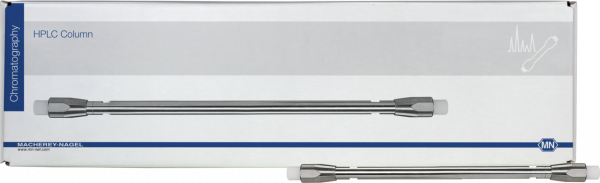
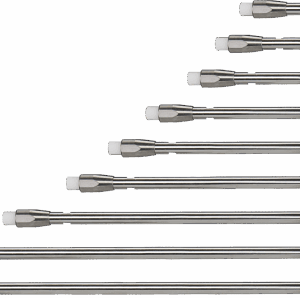
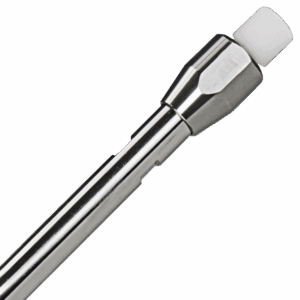
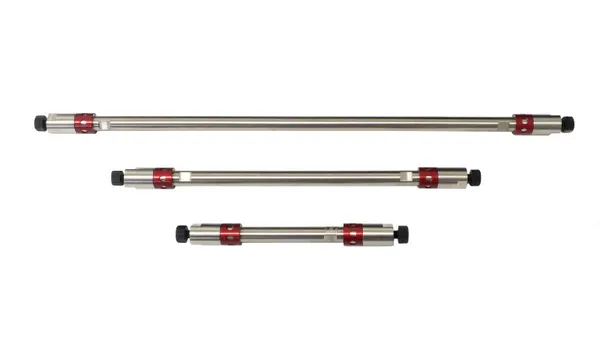
Nucleosil CHIRAL-2 100Å 5µm, 4.0 x 250mm, ea.

Method: HPLC, analytical
Brand: NUCLEOSIL
Base material: NUCLEOSIL – the standard silica
Phase: NUCLEOSIL CHIRAL-2
USP listing: Not available or proprietary
Surface chemistry: N-(3,5-dinitrobenzoyl)-D-phenylglycine (chiral selector) modification
Mode: Special application or diverse
Type: EC HPLC column (analytical)
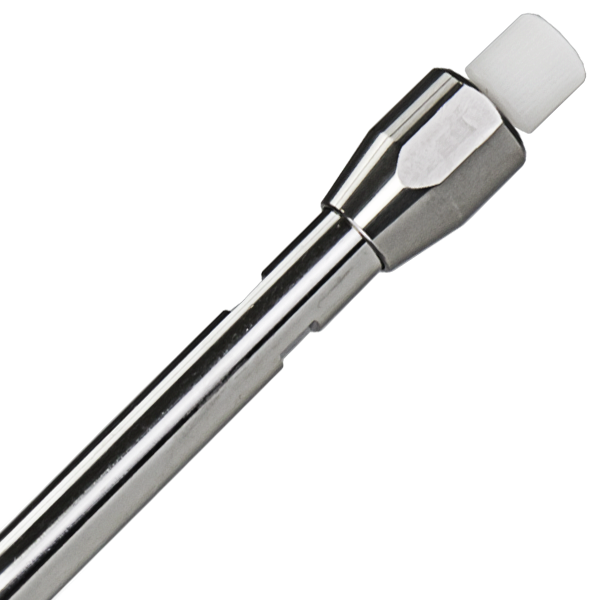
Hardware: Stainless steel
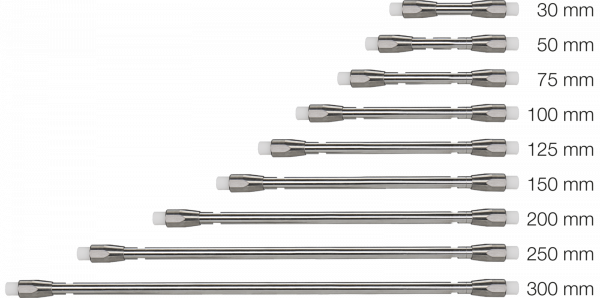
Column length: 250 mm
Column inner diameter: 4 mm
Particle type: Fully porous particles (FPP)
Particle shape: Spherical
Particle size: 5 µm
Eluent in HPLC column: n-heptane – 2-propanol – TFAA (trifluoroacetic acid) (100/0.05/0.05, v/v/v)
Recommended application(s): Chiral, enantiomers, Control in chiral organic syntheses, Diastereomers, Enantiomers, HPLC, Pesticides, Pharmaceuticals, Propionic acid derived herbicides, Stereoisomers
Endcapped: No
Carbon content: Not available or proprietary
pH stability: 2.0–8.0
Pore size: 100 Å
Specific surface according to BET: 350 m²/g
Temperature stability (max): 60 °C
Pressure stability (max): 400 bar / 5800 psi
Column volume: 3.15 mL
Storage temperature: 15–25 °C / 59–77 °F
Scope of delivery: 1x analytical HPLC column, instruction leaflet, certificate of analysis
Gross weight (incl. packaging): 238.77 g / 0.52 lbs
Packaging dimensions: 405 x 117 x 54 mm / 15.94 x 4.61 x 2.13 Inch
Hazardous material: No

Categoría: Brand:

Descripción

SKU: 720088.40

Silica-based phase for HPLC enantiomer separation. Principle interaction modes – charge-transfer interactions, hydrogen bonds, dipole-dipole interactions and steric effects. For control of the optical purity of a substance, the two columns NUCLEOSIL CHIRAL-2 and NUCLEOSIL CHIRAL-3 allow to select conditions such that the minor enantiomer, which is present as an impurity, is eluted before the main peak. Thus, overlapping peaks are avoided. This makes an exact quantification of the impurity much easier. Based on the original NUCLEOSIL silica gel. It is one of the first spherical silicas for HPLC and was originally developed by MACHEREY-NAGEL in 1974. It is exclusively manufactured in Germany and is still one of the most used HPLC silicas in quality control around the globe.